
Search the Site with

|
Search the Site with
|
 General Characteristics Crew List Memorabilia Cruise Books USS Boxer's COs Interesting Facts History Homeports of USS Boxer Image Gallery to end of page
 |  |  |
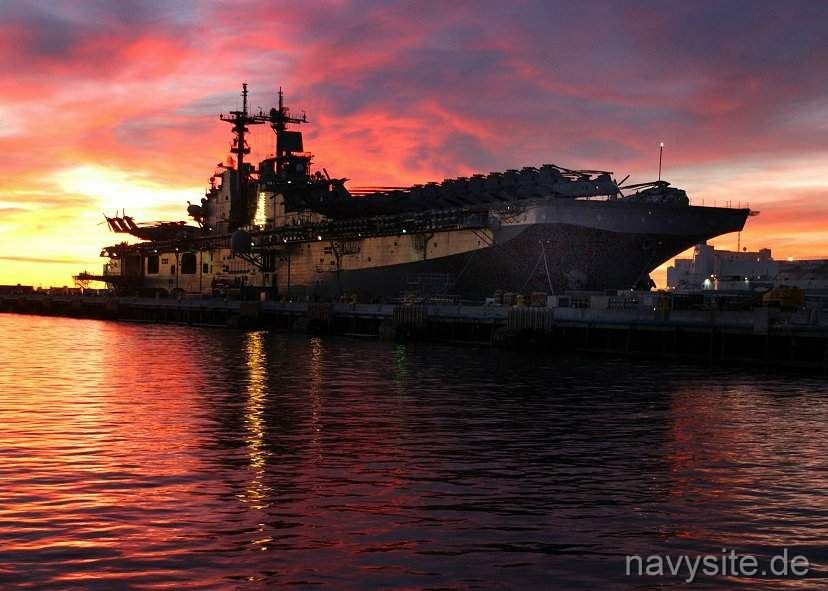
USS BOXER is the fourth amphibious assault ship (multi-purpose) in the WASP - class and the sixth ship in the Navy to bear the name. With a construction cost of $341 million, USS BOXER is also the cheapest ship in her class.
| General Characteristics: | Keel Laid: April 8, 1991 |
| Launched: August 13, 1993 | |
| Commissioned: February 11, 1995 | |
| Builder: Ingalls Shipbuilding , West Bank, Pascagoula, Miss. | |
| Propulsion system: two boilers, two geared turbines | |
| Propellers: two | |
| Aircraft elevators: two | |
| Length: 840 feet (256 meters) | |
| Flight Deck Width: 140 feet (42.6 meters) | |
| Beam: 106 feet (32.3 meters) | |
| Draft: 26.5 feet (8.1 meters) | |
| Displacement: approx. 40,500 tons full load | |
| Speed: 23 knots | |
| Aircraft: 30+ (including V-22 Osprey, AH-1Z Viper and AH-1W Super Cobra, F-35B, CH-53K King Stallion, MH-60S Knighthawk) | |
| Well deck capacity: three LCAC or two LCU or six LCM-8 or 40 Amphibious Assault Vessels (AAV) (normal) or 61 AAVs (stowed) | |
| Crew: Ship: 73 officers, 1,009 enlisted Marine Detachment: 1,894 | |
| Armament: two Mk-29 NATO | |
| Cost: approx. $341 million | |
| Homeport: San Diego, CA |
 back to top go to the end of the pageback to top go to the end of the page
Crew List:
This section contains the names of sailors who served aboard USS BOXER. It is no official listing but contains the names of sailors who submitted their information.
back to top go to the end of the pageback to top go to the end of the pageUSS BOXER Cruise Books:
back to top go to the end of the pageUSS BOXER's Commanding Officers:
| Period | Name |
|---|---|
| February 1995 - October 1996 | Captain Robert E. Annis, USN |
| October 1996 - February 1998 | Captain J. Kevin Moran, USN |
| February 1998 - September 24, 1999 | Captain Robert C. Massey, USN |
| September 24, 1999 - May 2001 | Captain Stephen D. Doyle, USN |
| May 2001 - September 2002 | Captain Michael G. Hlywiak, USN |
| September 2002 - June 2004 | Captain Thomas D. Crowley, USN |
| June 2004 - December 2005 | Captain Thomas J. Culora, USN |
| December 2005 - May 2007 | Captain Bruce W. Nichols, USN |
| May 2007 - September 2008 | Captain Matthew J. McCloskey, USN |
| September 2008 - January 2010 | Captain Mark E. Cedrun, USN |
| January 2010 - July 2011 | Captain Frank J. Michael, III, USN |
| July 2011 - January 2013 | Captain Kevin P. Flanagan, USN |
| January 2013 - July 2014 | Captain John E. Gumbleton, USN |
| July 2014 - September 2014 | Captain Wayne R. Brown, USN |
| September 2014 - October 2014 | Captain Keith G. Moore, USN |
| October 2014 - May 2016 | Captain Martin L. Pompeo, USN |
| May 2016 - December 2016 | Captain Michael A. Ruth, USN |
| December 2016 - July 2018 | Captain Benjamin J. Allbritton, USN |
| July 2018 - September 2019 | Captain Ronald A. Dowdell, USN |
| September 2019 - February 2021 | Captain Roger D. Heinken, Jr., USN |
| February 2021 - August 2022 | Captain Kathleen M. Ellis, USN |
| August 2022 - September 2023 | Captain Matthew W. Cieslukowski, USN |
| September 2023 - November 2024 | Captain Brian L. Holmes, USN |
| November 2024 - March 2026 | Captain Jason L. Tumlinson, III, USN |
| March 2026 - present | Captain Eli C. Owre, USN |
back to top go to the end of the page


back to top go to the end of the page
Interesting Facts:
back to top go to the end of the pageback to top go to the end of the page
USS BOXER History:
USS BOXER was constructed by Ingalls Shipbuilding at Pascagoula, Mississippi, where fabrication began on July 9, 1990. Her keel was laid on April 8, 1991, and she was launched on August 13, 1993. Following fitting out, machinery trials, and acceptance testing, the ship was delivered to the Navy on November 21, 1994, and commissioned at Pascagoula on February 11, 1995, with Captain Robert E. Annis in command.
Following commissioning, BOXER departed the Gulf Coast for her assigned homeport of San Diego, California. During the voyage, she passed through the Panama Canal and crossed the equator for the first time. She arrived at Naval Station San Diego on March 15, 1995, and began a series of post-commissioning trials and training operations in the Southern California operating areas. These included engineering evaluations, combat systems testing, helicopter and AV-8B Harrier flight operations, landing craft training, and damage control exercises. Particular attention was given to establishing procedures for the coordinated employment of aircraft, amphibious landing craft, and Marine ground forces from the new assault ship.
During the remainder of 1995, BOXER continued shakedown operations and preparations for a post-shakedown maintenance period. Her training included operations off the California coast, aviation qualifications, navigation exercises, and inspections intended to establish operational readiness. The ship also conducted amphibious integration training with Marine Corps units and evaluated the performance of her propulsion plant, communications equipment, and command facilities during extended periods underway.
On January 2, 1996, BOXER began a Restricted Availability in San Diego, during which shipyard personnel and the crew carried out maintenance and repairs identified during the preceding training period. After completing sea trials on January 24 and January 25, BOXER resumed local operations before entering Long Beach Naval Shipyard on March 12 for a Post-Shakedown Availability. The work included machinery repairs, modifications to aviation and combat systems, improvements to medical and living spaces, and alterations associated with the accommodation of female crew members. The availability continued until May 9, and BOXER returned to San Diego on May 10.
Following completion of the maintenance period, BOXER resumed preparations for her first overseas deployment. During July 1996, the ship conducted training off Southern California and visited Puerto Vallarta, Mexico, from July 26 to July 28. In August, she proceeded to Hawaiian waters for additional amphibious and operational training, arriving at Pearl Harbor on August 23. During the visit, BOXER underwent deperming procedures intended to reduce her magnetic signature before resuming operations at sea.
From September 3 to September 11, 1996, BOXER participated in a Composite Training Unit Exercise in Hawaiian waters. The exercise included amphibious operations, aviation training, command-and-control procedures, and the integration of the ship with the embarked Marine expeditionary force. On October 2, Captain James K. Moran relieved Captain Robert E. Annis as commanding officer. Later that month, BOXER participated in San Francisco Fleet Week from October 12 to October 15, hosting visitors and taking part in public events. Additional certification exercises followed from November 6 to November 15, after which the crew continued preparations for deployment.
On March 24, 1997, BOXER departed San Diego for her maiden six-month Western Pacific and Indian Ocean deployment, carrying the 15th Marine Expeditionary Unit (Special Operations Capable). The amphibious ready group included USS OGDEN (LPD 5) and USS FORT FISHER (LSD 40). The embarked Marine force included Battalion Landing Team 2/1, Marine Medium Helicopter Squadron 161 (Reinforced), and Marine Service Support Group 15. Following departure, the ships crossed the Pacific and conducted underway training in preparation for operations with the Seventh and Fifth Fleets.
During April 1997, BOXER operated in the western Pacific, conducting aviation qualifications, landing craft exercises, and training with the embarked Marines. The ship visited Hong Kong from April 18 to April 21, providing an opportunity for maintenance, logistical support, and crew liberty. The amphibious ready group subsequently continued through Southeast Asian waters toward the Indian Ocean, where the Marines maintained readiness for amphibious and regional contingency operations.
During the following weeks, BOXER and the accompanying amphibious ships conducted exercises with allied and regional military forces. The deployment included a visit to Massawa, Eritrea, before the ships proceeded into the Persian Gulf. American naval forces in the region continued supporting Operation Southern Watch, enforcing restrictions on Iraqi military aviation over southern Iraq, while amphibious forces maintained readiness for possible contingency operations.
From July 3 to July 9, 1997, BOXER visited Jebel Ali, United Arab Emirates, before participating in Exercise Red Reef with Saudi Arabian forces from July 11 to July 18. The exercise involved amphibious operations, helicopter movements, landing craft training, and coordination between American Marines and Saudi military units. BOXER provided aviation, command, and logistical support while the embarked Marines practiced moving personnel and equipment from ship to shore.
Following Exercise Red Reef, BOXER participated in Exercise Iron Magic in the United Arab Emirates from July 22 to August 4, 1997. The training included amphibious landings, ground combat exercises, aviation operations, and cooperation with regional forces. During these activities, the ship's well deck supported LCAC and other landing craft operations, while Marine helicopters transported personnel and equipment between the ship and training areas ashore.
After completing operations in the Persian Gulf, the amphibious ready group began the return passage across the Indian Ocean and western Pacific. The ships separated temporarily for port visits, with BOXER visiting Bali, Indonesia, while USS OGDEN and USS FORT FISHER called at Surabaya. BOXER subsequently visited Darwin, Australia, while the other two ships proceeded to Cairns. The amphibious force later reassembled for the Pacific crossing and visited Pearl Harbor before returning to San Diego on September 24, 1997.
Following the maiden deployment, BOXER entered a period of post-deployment maintenance and training. During the opening months of 1998, the ship conducted engineering inspections, flight operations, and exercises with Marine Corps units preparing for another Western Pacific deployment. On February 6, Captain Robert C. Massey relieved Captain James K. Moran as commanding officer. Additional amphibious exercises and certification events followed during the year as BOXER prepared to return to the Indian Ocean and Persian Gulf.
On December 5, 1998, BOXER departed San Diego for her second Western Pacific deployment, carrying the 13th Marine Expeditionary Unit (Special Operations Capable). The deployment was conducted in conjunction with the wider naval presence established by the carrier battle group led by USS CARL VINSON (CVN 70). American naval forces were maintaining a substantial presence in the Persian Gulf as tensions with Iraq continued over weapons inspections and compliance with United Nations Security Council resolutions.
After crossing the Pacific, BOXER proceeded through Southeast Asia and the Indian Ocean, conducting amphibious training and visiting regional ports. The deployment included Exercises Edged Mallet, Neon Falcon, and Eager Mace, which involved amphibious operations, Marine aviation training, and cooperation with allied and partner forces. The ship also conducted maritime security activities and maintained readiness to support operations associated with the continuing American military presence in the Gulf.
During the deployment, BOXER visited ports including Hong Kong, Singapore, Phuket, Abu Dhabi, and Jebel Ali. The amphibious force also conducted exercises involving the movement of Marine ground units from ship to shore, helicopter assaults, and the coordinated employment of aviation and surface landing craft. The embarked Marines maintained readiness for possible operations ashore while the ship carried out flight operations, underway replenishments, and maritime security training.
In early 1999, BOXER represented the U.S. Navy at the International Defence Exhibition in Abu Dhabi, United Arab Emirates. The visit provided an opportunity for military officials and representatives of participating nations to examine the ship's amphibious and aviation capabilities. During the Persian Gulf portion of the deployment, BOXER continued exercises with regional forces and supported the regular operational requirements of the Fifth Fleet.
Following completion of the Middle Eastern assignment, BOXER began the return passage through the Indian Ocean and western Pacific. The ship made additional port visits, including Bali, Indonesia, and Townsville, Australia, before continuing toward Hawaii. The amphibious ready group subsequently crossed the eastern Pacific, and BOXER returned to San Diego on June 5, 1999.
During the remainder of 1999, BOXER underwent maintenance and resumed local training with Pacific Fleet units. Captain Stephen D. Doyle assumed command on September 24, 1999. The ship continued engineering evaluations, aviation qualifications, and amphibious training in preparation for operations during the following year.
On May 30, 2000, BOXER departed San Diego to participate in Exercise Rim of the Pacific 2000 in Hawaiian waters. The multinational exercise involved military forces from seven Pacific Rim nations and included amphibious landing operations, maritime warfare training, and exercises involving allied naval and ground forces. BOXER supported the embarked Marines during ship-to-shore movements, helicopter operations, and training designed to improve coordination between participating military units.
During RIMPAC 2000, BOXER conducted her first major training events specifically designed around noncombatant evacuation operations and humanitarian assistance and disaster relief missions. These exercises involved the preparation of evacuation facilities, movement of civilians and equipment, establishment of temporary reception areas, and coordination between naval and Marine Corps units. BOXER returned to San Diego on July 13, 2000, and subsequently continued maintenance and preparations for another overseas deployment.
During the second half of 2000 and the opening months of 2001, BOXER conducted amphibious integration exercises, aviation training, and operational certification events with the 11th Marine Expeditionary Unit (Special Operations Capable). The training included landing craft operations, helicopter assault procedures, command-and-control exercises, and preparations for maritime security operations in the western Pacific and Middle East.
On March 14, 2001, BOXER departed San Diego for her third Western Pacific deployment, accompanied by USS CLEVELAND (LPD 7) and USS HARPERS FERRY (LSD 49). The ships carried the 11th Marine Expeditionary Unit and proceeded across the Pacific, conducting training and aviation operations during the transit. The deployment included scheduled exercises and regional engagements in Southeast Asia, the Indian Ocean, and the Persian Gulf.
From April 9 to April 11, 2001, BOXER and the other ships of the amphibious ready group conducted humanitarian assistance operations in East Timor. The territory was recovering from violence and destruction associated with the 1999 independence referendum, and international organizations were assisting with the restoration of essential services. American sailors and Marines provided medical and dental treatment, transported humanitarian supplies, and participated in repairs to schools and community facilities.
During the East Timor operation, Marines from the 11th MEU worked with personnel of the United Nations Transitional Administration and local organizations. LCACs transported more than 80 metric tons of food and other supplies to coastal communities, including locations in the isolated Oecusse enclave. Marine personnel also assisted with repairs to schools and youth facilities in the Dili area, while Navy medical teams provided treatment to local residents.
Following the humanitarian assignment, BOXER continued the deployment through Southeast Asia and the Indian Ocean. The amphibious force participated in Exercises Eager Mace and Red Reef and conducted maritime security training associated with the continuing American presence in the Persian Gulf. Port visits and logistical stops included Singapore, Phuket, Jebel Ali, and other locations in the region. The embarked Marines conducted amphibious landing exercises and aviation training while maintaining readiness for possible regional contingencies.
During the return passage across the Pacific, BOXER continued routine training and operational activities. On August 26, 2001, the amphibious ready group received a distress call from the Taiwanese fishing vessel JI MOON CHUN 21, which had suffered a fire and flooding. BOXER and the other ships responded to assist the damaged vessel and its crew. Eight fishermen were rescued, including the Taiwanese captain and seven crew members from mainland China.
After completing the rescue operation, BOXER resumed the return passage toward California. On September 11, 2001, terrorist attacks struck the World Trade Center in New York City and the Pentagon, prompting heightened security measures throughout the American armed forces. BOXER was still at sea during the attacks and subsequently continued to San Diego, arriving on September 14, 2001.
Following the homecoming, BOXER entered a post-deployment maintenance period. In November 2001, the ship entered the National Steel and Shipbuilding Company (NASSCO) shipyard in San Diego for her first Docking Phased Maintenance Availability. The ship was moved into a floating dry dock for extensive hull maintenance, machinery repairs, inspections, and modifications to shipboard systems. The work included maintenance of propulsion and auxiliary machinery, preservation of underwater structures, and equipment improvements intended to support continued operational service.
The maintenance availability continued into the spring of 2002, after which BOXER resumed engineering trials and operational training in the Southern California operating areas. During the summer, the ship participated in activities associated with Millennium Challenge 2002, a large joint military experiment designed to evaluate command-and-control procedures and the employment of American forces in complex operational scenarios. BOXER subsequently continued amphibious training and preparations as the United States expanded military planning for possible operations against Iraq.
During the final months of 2002, BOXER completed a series of training and certification exercises with Marine Corps and Pacific Fleet units. These included aviation qualifications, landing craft operations, engineering inspections, and exercises intended to prepare the ship for deployment on short notice. The growing possibility of military action against Iraq led to accelerated preparations for the movement of additional American naval and Marine Corps forces to the Middle East.
On January 17, 2003, BOXER departed San Diego for a deployment in support of Operation Enduring Freedom and preparations for possible military action against Iraq. The ship formed part of Amphibious Task Force West, which also included USS BONHOMME RICHARD (LHD 6), USS ANCHORAGE (LSD 36), USS CLEVELAND, USS COMSTOCK (LSD 45), USS DUBUQUE (LPD 8), and USS PEARL HARBOR (LSD 52). The ships carried Marine personnel, aircraft, vehicles, and logistical equipment for operations in the U.S. Central Command area of responsibility.
Following the Pacific and Indian Ocean transits, BOXER entered the Seventh Fleet area of responsibility on January 29, 2003, and the Fifth Fleet area on February 19. The amphibious force subsequently proceeded to the northern Persian Gulf, where American and coalition forces were assembling for the anticipated invasion of Iraq. From February 24 to March 1, BOXER supported the disembarkation of Marine personnel and equipment in the vicinity of Kuwait Naval Base.
During March 2003, BOXER remained in the Persian Gulf, conducting aviation operations, logistical support, and command-and-control activities as American and coalition forces completed preparations for the invasion. The ship served as a sea-based aviation and support platform for Marine units operating ashore. Her aircraft facilities supported helicopter operations and combat aviation missions, while the ship maintained the capability to provide medical treatment and logistical assistance to personnel involved in the military campaign.
On March 20, 2003, American and coalition forces began Operation Iraqi Freedom. BOXER continued operating in the Persian Gulf during the opening phase of the war, providing aviation and logistical support to forces operating in southern Iraq. The amphibious task force used helicopters and landing craft to move personnel and supplies, while shipboard command facilities supported the coordination of American and coalition military operations.
On April 1, 2003, American special operations forces rescued Army Private First Class Jessica Lynch from a hospital in Nasiriyah, Iraq, where she had been held after her capture during the opening days of the war. Intelligence specialists aboard BOXER contributed satellite imagery of the hospital and surrounding area to the planning of the operation. Marine aviators operating from BOXER also supported the mission, which was conducted by a combined force of American special operations and supporting units.
BOXER remained underway for approximately the first 100 days of the deployment. During this period, the ship conducted repeated aviation operations and logistical activities in support of coalition forces ashore. On April 27, 2003, BOXER entered Jebel Ali, United Arab Emirates, for her first extended port visit since departing San Diego. The visit continued through May 3, allowing the crew to conduct maintenance, replenish supplies, and receive a period of liberty.
After departing Jebel Ali, BOXER resumed operations in the Persian Gulf through May 31, 2003. The ship continued providing aviation and maritime support while the major combat phase in Iraq gave way to stabilization and security operations. On June 1, BOXER departed the Fifth Fleet area of responsibility and began the return passage across the Indian Ocean toward Australia.
On June 20, 2003, BOXER arrived at Sydney, Australia, for a port visit that continued through June 23. The ship subsequently proceeded northward along the Australian coast and visited Townsville from June 28 to July 1. During the visits, the crew participated in recreational activities and community engagements while shipboard personnel completed maintenance and logistical preparations for the Pacific crossing. BOXER continued eastward and reentered the Third Fleet area of responsibility on July 8, 2003. She arrived at Pearl Harbor on July 14 for a three-day port visit before beginning the final passage toward California. On July 24 and July 25, the ship conducted the disembarkation of Marines and equipment in the Camp Pendleton operating area. BOXER returned to Naval Station San Diego on July 26, 2003.
Following the return, BOXER entered a post-deployment stand-down and maintenance period. During August, the ship underwent boiler inspections and engineering maintenance before resuming local training. Additional inspections, aviation qualifications, and operational preparations followed during the autumn. In November, BOXER visited San Francisco for public engagements and continued training associated with her next overseas assignment.
On January 14, 2004, BOXER departed San Diego on a short-notice deployment to transport additional American forces and equipment to the Middle East in support of Operation Iraqi Freedom II. The mission involved the movement of personnel and equipment associated with the I Marine Expeditionary Force and the 3rd Marine Aircraft Wing, which were preparing to support troop rotations and continued operations in Iraq.
During the deployment, BOXER transported more than 200 Marines, 16 CH-53E Super Stallion helicopters from Marine Heavy Helicopter Squadron 466, approximately 150 trucks and trailers, aircraft towing vehicles, ammunition containers, and additional logistical equipment. The ship's aviation and vehicle storage facilities were used to accommodate the helicopters, vehicles, and supplies, while the embarked personnel prepared for their assignments in the Central Command area of responsibility.
After crossing the Pacific and Indian Oceans, BOXER entered the Persian Gulf and began transferring the embarked personnel and equipment to Kuwait Naval Base. The offload required approximately five days and involved coordinating helicopter movements, cargo handling, and transportation between the ship and shore facilities. The equipment was subsequently distributed to American forces operating in Iraq. Following completion of the transport mission, BOXER began the return voyage across the Indian and Pacific Oceans and arrived in San Diego on April 29, 2004.
During the remainder of 2004, BOXER resumed training and maintenance in Southern California. The ship conducted local operations, aviation qualifications, amphibious exercises, and engineering evaluations while preparing for another overseas deployment. Additional exercises were conducted with Marine Corps units and Pacific Fleet ships to maintain readiness for contingency missions and regional security cooperation activities.
On April 29, 2005, BOXER departed San Diego for a Western Pacific deployment under the Navy's Fleet Response Plan. Unlike the earlier deployments concentrated on the Persian Gulf, this cruise involved extensive multinational exercises and port visits throughout the western Pacific, Southeast Asia, and Australian waters. The ship embarked Marine personnel and supporting aviation and logistical detachments for amphibious training and regional cooperation activities.
Following the Pacific crossing, BOXER proceeded toward Japan, arriving at Sasebo on May 17, 2005. The ship subsequently continued southward through the East China Sea and western Pacific before entering Australian waters. On May 30, BOXER visited Darwin, Australia, where the crew conducted maintenance and logistical activities while preparing for multinational exercises in the region.
During June 2005, BOXER participated in Exercise Talisman Saber, a major combined American-Australian military exercise conducted in Queensland and surrounding waters. The training included amphibious operations, aviation support, command-and-control exercises, and the movement of Marine ground forces and equipment between ship and shore. BOXER operated in the Coral Sea and visited Townsville beginning on June 8, supporting the participating Marine and Australian military units.
Following the Australian exercises, BOXER proceeded northward through the Arafura and Timor Seas toward Southeast Asia. The ship entered Singapore in early July and subsequently continued toward Malaysia for Cooperation Afloat Readiness and Training 2005. The CARAT program involved American and Southeast Asian naval forces conducting maritime security exercises, communications training, shipboard operations, and professional exchanges intended to improve cooperation between the participating navies.
From July 8 to July 15, 2005, BOXER operated from Kemaman, Malaysia, while participating in the Malaysian phase of CARAT. The exercise included combined naval maneuvers, amphibious training, and cooperation between American and Malaysian military personnel. BOXER returned to Kemaman for additional port periods during the exercise before proceeding through the South China Sea toward the Philippines and Japan.
During the latter half of July 2005, BOXER continued regional training and operational activities in Southeast Asian waters. The ship subsequently proceeded toward Okinawa, arriving in the area at the end of July. On August 1, BOXER conducted a port visit and logistical stop at Okinawa before participating in Japan-U.S. amphibious exercises during the following weeks.
From August 7 to August 13, 2005, BOXER participated in JASEX 05, conducting combined training with Japanese military forces. The exercises included amphibious landing operations, aviation support, communications training, and coordination between American and Japanese units. Following the exercise, BOXER returned to Sasebo for a port visit beginning on August 15 and departed Japan on August 17 for the return passage across the Pacific.
After continuing eastward, BOXER arrived at Pearl Harbor in early September 2005. The ship departed Hawaii on September 7 with family members and invited guests embarked for a Tiger Cruise during the final Pacific crossing. BOXER returned to Naval Station San Diego on September 14, 2005.
During the autumn of 2005 and the opening months of 2006, BOXER underwent maintenance and resumed training with Pacific Fleet and Marine Corps units. The ship conducted aviation qualifications, amphibious landing exercises, and preparations for another deployment to the Middle East. In October 2005, BOXER participated in San Francisco Fleet Week, hosting public visits and military engagements during the annual event.
Throughout the first half of 2006, BOXER completed the training and certification requirements for deployment with the 15th Marine Expeditionary Unit (Special Operations Capable). The operational training cycle included amphibious integration exercises, aviation training, command-and-control operations, and the preparation of Marine ground and logistical units for possible employment ashore. The ship also participated in exercises with other surface combatants assigned to Expeditionary Strike Group Five.
On September 13, 2006, BOXER departed San Diego as flagship of Expeditionary Strike Group Five for a deployment to the western Pacific, Indian Ocean, and Middle East. The strike group included USS DUBUQUE, USS COMSTOCK, USS BENFOLD (DDG 65), USS HOWARD (DDG 83), and USS BUNKER HILL (CG 52). The 15th Marine Expeditionary Unit provided the embarked Marine force, including aviation, ground combat, and logistics elements prepared for operations in support of American forces in Iraq.
Following the Pacific crossing, the strike group arrived at Pearl Harbor on September 22, 2006, for a scheduled port visit and a transfer of operational command from Rear Admiral Mark W. Balmert to Captain David Angood, Commander, Amphibious Squadron Five. The ships subsequently continued westward across the Pacific, conducting coordinated maneuvering, air defense exercises, and training designed to integrate the amphibious ships with the accompanying surface combatants.
On October 12, 2006, BOXER arrived at Changi Naval Base in Singapore for a port visit. The ship subsequently proceeded into the Indian Ocean, where the expeditionary strike group prepared for Exercise Malabar 2006 with the Indian Navy's Western Fleet. The multinational exercise was conducted off the southwestern coast of India and involved naval forces from the United States, India, and Canada. Exercise Malabar 2006 included formation steaming, maritime security operations, force protection exercises, amphibious landing operations, aviation training, coordinated naval gunfire, and antisubmarine warfare activities. Thirteen ships participated, including BOXER and other units of the expeditionary strike group. Marine personnel from the 15th MEU also participated in training with Indian Army units, including soldiers from the Sikh Light Infantry. The exercise concluded on November 5, 2006, after which BOXER and other ships continued toward the Middle East.
During the Indian Ocean transit, BOXER visited Mumbai, India, from October 31 to November 3, 2006. The ship subsequently continued toward the Arabian Sea and entered the Fifth Fleet area of responsibility on November 8. The amphibious force began preparations for the movement of Marine units into Iraq while continuing maritime security operations and regional training.
In November 2006, elements of the 15th MEU began moving ashore for operations in Al Anbar Province, Iraq. The Marines were assigned to support American forces engaged in counterinsurgency and security operations in the province, where armed groups were conducting attacks against coalition forces and Iraqi authorities. BOXER remained available as an afloat aviation, medical, communications, and logistical support platform while the Marines carried out their missions ashore.
During the following months, Marine units from the 15th MEU operated in several areas of Al Anbar Province, including the region around Ramadi and Haditha. Their assignments involved security operations, patrols, cooperation with Iraqi forces, and support for efforts to establish local law enforcement and government institutions. The deployment was extended twice as American military authorities increased the number of forces operating in Iraq during the 2007 troop surge.
While the embarked Marines operated ashore, BOXER and the other ships of the expeditionary strike group continued maritime security operations in the Persian Gulf. These activities included surveillance of shipping, maritime interdiction training, underway replenishments, and coordination with coalition naval forces. The ship's aviation and logistical facilities supported the continuing deployment, while personnel conducted maintenance and operational training during extended periods at sea.
On November 19, 2006, BOXER anchored near Manama, Bahrain, for a scheduled port visit. The ship subsequently resumed operations in the Persian Gulf before returning to Bahrain for another port period beginning on December 30 and continuing into January 2007. During these visits, the crew carried out maintenance, replenished supplies, and participated in recreational and community relations activities.
On January 28, 2007, BOXER arrived at Jebel Ali, United Arab Emirates, for a five-day port visit. Following departure, she resumed maritime security operations while the 15th MEU continued its assignments in Iraq. Further port visits and logistical stops followed during the deployment, including additional periods in Bahrain. The strike group maintained its regional naval presence as American forces expanded operations against insurgent groups in Iraq.
During April 2007, the embarked Marines completed their assignments ashore and began returning to the amphibious force. BOXER supported the recovery of personnel, vehicles, aircraft, and equipment as the extended deployment approached its final phase. The ship subsequently began the return voyage across the Indian and Pacific Oceans. BOXER returned to Naval Station San Diego on May 31, 2007.
Following the homecoming, BOXER entered a post-deployment maintenance and training period. During the remainder of 2007 and early 2008, the ship conducted local operations, engineering inspections, aviation qualifications, and preparations for a humanitarian and civic-assistance deployment to Central and South America. The planned mission differed from the ship's recent Middle Eastern assignments and required the embarkation of medical personnel, engineers, military support units, and representatives of civilian organizations.
On April 28, 2008, BOXER departed San Diego for the Pacific phase of Operation Continuing Promise 2008. The mission was organized to provide medical, dental, veterinary, and engineering assistance in cooperation with host nations, American government agencies, and nongovernmental organizations. The ship served as a mobile medical and logistical platform for the embarked personnel, while helicopters and landing craft supported the transportation of teams and supplies ashore.
During May and June 2008, BOXER conducted humanitarian and civic-assistance operations in Guatemala, El Salvador, and Peru. Medical personnel established temporary treatment facilities and worked with local healthcare providers to examine patients, provide dental care, and conduct preventive health activities. Engineering teams assisted with repairs and improvements to schools, clinics, and other community facilities.
In El Salvador, BOXER supported a humanitarian engagement lasting approximately thirteen days. The embarked medical and engineering teams conducted activities in cooperation with Salvadoran authorities and local organizations, while Navy and Marine Corps personnel transported supplies and equipment between the ship and shore. Similar operations were conducted during the visits to Guatemala and Peru, with the ship providing aviation, logistical, and medical support for the participating personnel.
Following completion of the scheduled engagements, BOXER began the return passage toward California. The ship continued training and maintenance during the transit and returned to Naval Station San Diego on June 26, 2008.
During the second half of 2008, BOXER resumed maintenance and operational training in preparation for another overseas deployment. The ship conducted amphibious integration exercises, aviation qualifications, and certification events with the 13th Marine Expeditionary Unit. Preparations included maritime security operations and training intended to support the Navy's expanding role in counterpiracy activities off the Horn of Africa.
On January 9, 2009, BOXER departed San Diego as flagship of the BOXER Amphibious Ready Group, accompanied by USS NEW ORLEANS (LPD 18) and USS COMSTOCK. The embarked force included the 13th Marine Expeditionary Unit and supporting Navy aviation, medical, and amphibious units. The larger deployed formation also included USS LAKE CHAMPLAIN (CG 57), providing additional surface warfare and air defense capabilities.
Following the Pacific and Indian Ocean transits, BOXER entered the Fifth Fleet area of responsibility and began maritime security operations in the Gulf of Aden and western Indian Ocean. On March 8, 2009, BOXER assumed duties as flagship of Combined Task Force 151, the multinational naval force established to conduct counterpiracy operations off Somalia. The task force coordinated patrols, surveillance, maritime security operations, and responses to attacks against commercial shipping using ships and aircraft from several participating nations.
On March 13, 2009, a fire broke out on the flight deck of BOXER at approximately 4:15 p.m. while an AH-1W Super Cobra helicopter assigned to Marine Medium Helicopter Squadron 163 (Reinforced) was being refueled. The incident occurred while the ship was operating in the Gulf of Aden. Two sailors were injured and received treatment from the ship's medical department. Both were reported to be in stable condition, and no additional sailors or Marines were injured. The Navy initiated an investigation into the cause of the fire while BOXER continued her assigned operations.
During March and April 2009, BOXER supported counterpiracy patrols and maritime security operations in the Gulf of Aden and Indian Ocean. The ship's command facilities were used to coordinate the activities of Combined Task Force 151, while its aviation assets supported surveillance and responses to reported threats against merchant shipping. The embarked Marines maintained readiness to conduct visit, board, search, and seizure missions and other contingency operations if required.
On April 8, 2009, Somali pirates attacked the American-flagged container ship MAERSK ALABAMA in the Indian Ocean. Although the vessel's crew regained control of the ship, the pirates escaped in a lifeboat with the master, Captain Richard Phillips, as a hostage. The guided-missile destroyer USS BAINBRIDGE (DDG 96) responded to the incident, while the guided-missile frigate USS HALYBURTON (FFG 40) and other American naval units provided additional support.
BOXER was subsequently directed toward the scene to provide medical facilities, aviation support, and an additional operational platform for the American response. The ship's personnel prepared to receive the rescued hostage and support the special operations personnel involved in the mission. The crisis continued for several days as American military authorities attempted to secure Phillips's release. On April 12, 2009, U.S. Navy special operations personnel operating from USS BAINBRIDGE rescued Captain Phillips after three pirates holding him hostage were killed by Navy marksmen. A fourth pirate had already surrendered and was taken into custody. Phillips was subsequently transferred to BOXER, where he received medical examinations and care from the ship's medical personnel. BOXER also provided support facilities for personnel involved in the rescue operation.
Following the MAERSK ALABAMA incident, BOXER continued counterpiracy and maritime security operations in the Gulf of Aden and western Indian Ocean. The ship coordinated with American and coalition naval forces operating in the region and maintained an aviation and expeditionary contingency capability. The amphibious ready group also conducted port visits, logistical replenishments, and training with partner naval forces during the remaining months of the deployment.
In July 2009, BOXER began the return voyage across the Indian and Pacific Oceans. The ship continued routine aviation operations, replenishments, and maintenance during the transit. BOXER returned to Naval Station San Diego on August 1, 2009.
Following the deployment, BOXER entered an extended maintenance period at NASSCO in San Diego. The work involved repairs and inspections of propulsion and auxiliary machinery, hull maintenance, and modernization of shipboard equipment. Additional modifications and maintenance were carried out to prepare the ship for continued operational service and future deployments with Marine aviation and ground forces.
During 2010, BOXER continued maintenance and subsequently resumed operational training in the Southern California operating areas. The ship conducted engineering evaluations, aviation qualifications, amphibious landing exercises, and inspections as preparations began for another Western Pacific deployment. The training cycle included integration exercises with the 13th Marine Expeditionary Unit and the other ships assigned to the amphibious ready group.
On February 22, 2011, BOXER departed San Diego for a seven-month deployment with the 13th Marine Expeditionary Unit embarked. The amphibious ready group included USS GREEN BAY (LPD 20) and USS COMSTOCK, operating under Amphibious Squadron One. The embarked Marine force included approximately 2,200 Marines, with aviation, ground combat, and logistics elements prepared for amphibious and regional contingency operations.
Following departure, the amphibious ready group crossed the eastern Pacific and arrived at Pearl Harbor on March 1, 2011. During the visit, BOXER replenished supplies, embarked additional personnel, and completed logistical preparations for the remainder of the Pacific crossing. The ships subsequently continued westward toward the Indian Ocean and Middle East, conducting aviation and amphibious training during the transit.
During the spring of 2011, BOXER operated in the Fifth Fleet area of responsibility, conducting maritime security operations and regional training activities. The deployment coincided with political unrest and military operations across several Middle Eastern and North African countries, including the continuing conflict in Afghanistan and the developing civil war in Libya. BOXER maintained a sea-based expeditionary capability while supporting American naval requirements in the Arabian Sea and surrounding waters.
During the following months, the amphibious ready group conducted maritime security patrols, training exercises, and logistical operations with American and coalition forces. The embarked Marines participated in regional cooperation activities, while Marine aircraft conducted flight operations in support of readiness requirements. BOXER also supported the movement of personnel and equipment during distributed training activities involving the amphibious ready group.
On August 16, 2011, BOXER departed the Fifth Fleet area of responsibility and proceeded toward Southeast Asia. On August 22, the amphibious ready group arrived at Phuket, Thailand, for a scheduled port visit. BOXER, USS GREEN BAY, and USS COMSTOCK participated in the visit, allowing the crews to conduct maintenance, replenish supplies, and take part in community relations and recreational activities.
After departing Thailand, BOXER continued through the western Pacific and arrived at Naval Station Guam on September 9, 2011. The port visit provided additional logistical support before the final Pacific crossing. BOXER and USS COMSTOCK subsequently continued toward Hawaii, where they rejoined USS GREEN BAY for the last stage of the return voyage.
On September 20, 2011, the BOXER Amphibious Ready Group arrived at Pearl Harbor for a scheduled port visit. The ships completed final maintenance and logistical preparations before departing Hawaii toward California. BOXER returned to Naval Station San Diego on September 30, 2011.
During 2012, BOXER underwent maintenance and resumed training with Pacific Fleet and Marine Corps units. The ship conducted engineering inspections, aviation qualifications, and amphibious exercises in preparation for another deployment. These activities included landing craft operations, helicopter assault training, command-and-control exercises, and the integration of the embarked Marine expeditionary force with the ship's aviation and logistical facilities.
Throughout the first half of 2013, BOXER completed a series of pre-deployment exercises with the 13th Marine Expeditionary Unit. The amphibious ready group included USS NEW ORLEANS and USS HARPERS FERRY. The training program included amphibious integration exercises, aviation qualifications, a Composite Training Unit Exercise, and certification events intended to prepare the force for operations in the western Pacific and Middle East.
On August 23, 2013, BOXER departed San Diego with USS NEW ORLEANS and USS HARPERS FERRY for an eight-month deployment carrying the 13th Marine Expeditionary Unit. The deployment marked the first time a West Coast Amphibious Ready Group conducted a full deployment with a complement of Marine MV-22B Osprey aircraft. The aviation combat element also included attack and utility helicopters and other Marine aircraft capable of supporting amphibious operations and expeditionary missions.
Following the Pacific crossing, the BOXER Amphibious Ready Group entered the Seventh Fleet area of responsibility on September 5, 2013. During the following weeks, the ships conducted training and regional security cooperation activities with allied and partner forces. The deployment included operations and port visits in the Philippines, Singapore, and other Southeast Asian locations before the amphibious force continued toward the Indian Ocean.
During the autumn of 2013, BOXER and the embarked Marines participated in exercises intended to improve amphibious interoperability, maritime security procedures, and the coordination of naval and ground combat elements. The ship's flight deck supported MV-22B operations, providing the embarked Marines with greater range and speed for the movement of personnel and equipment than the CH-46E helicopters used during earlier deployments.
After entering the Fifth Fleet area of responsibility, BOXER conducted maritime security operations, aviation training, and regional cooperation activities throughout the Arabian Sea and Persian Gulf. The 13th MEU participated in exercises with regional military forces, including training in Oman, Kuwait, Djibouti, India, the United Arab Emirates, Bahrain, and Israel. The exercises involved ground combat training, amphibious landing procedures, helicopter and tiltrotor operations, and the movement of Marine personnel between ship and shore.
During late 2013 and early 2014, BOXER continued operations in the Middle East, maintaining an expeditionary contingency capability while supporting the training requirements of the embarked Marines. The ship conducted underway replenishments, maintenance, and aviation operations during extended periods at sea. The amphibious ready group also participated in maritime security training intended to improve the ability of Navy and Marine Corps forces to operate with regional partners.
During the return passage through the Indian Ocean and western Pacific, BOXER continued combined exercises and port visits, including activities in South Korea. The embarked Marines prepared their vehicles, aircraft, and equipment for disembarkation in Southern California, while the ship conducted routine maintenance and operational training during the Pacific crossing.
On April 24, 2014, elements of the 13th Marine Expeditionary Unit began returning to Camp Pendleton after disembarking from the amphibious ships. BOXER, USS NEW ORLEANS, and USS HARPERS FERRY returned to Naval Base San Diego on April 25, 2014.
Following the deployment, BOXER entered a period of maintenance, inspections, and operational training. During the remainder of 2014 and throughout 2015, the ship conducted engineering evaluations, aviation qualifications, and amphibious exercises with Marine Corps and Pacific Fleet units. These activities included training with MV-22B Ospreys and other Marine aircraft, landing craft operations, and certification exercises in preparation for another deployment to the western Pacific and Middle East.
During the latter half of 2015, BOXER completed an extensive training cycle with the 13th Marine Expeditionary Unit and Amphibious Squadron One. The training included amphibious integration exercises, aviation qualifications, maritime security operations, and a Composite Training Unit Exercise intended to certify the amphibious ready group for deployment. Marine Medium Tiltrotor Squadron 166 (Reinforced) provided the aviation combat element, with MV-22B Ospreys, AV-8B Harriers, and other Marine aircraft embarked.
On February 12, 2016, BOXER departed San Diego with USS NEW ORLEANS and USS HARPERS FERRY for a deployment with the 13th Marine Expeditionary Unit. The ships proceeded across the Pacific toward the western Pacific and Indian Ocean, conducting aviation training and amphibious operations during the transit.
During March 2016, BOXER participated in Exercise Ssang Yong, a large combined amphibious exercise conducted with American and South Korean forces. The training included amphibious landing operations, helicopter and MV-22B transport, command-and-control exercises, and cooperation between Navy, Marine Corps, and South Korean military units. Following the exercise, BOXER visited Hong Kong before continuing toward Southeast Asia and the Indian Ocean.
On April 5, 2016, the BOXER Amphibious Ready Group entered the Fifth Fleet area of responsibility. During the following weeks, the ships conducted maritime security operations, training exercises, and preparations for possible support to American and coalition forces fighting Islamic State organizations in Iraq and Syria. The embarked Marines maintained readiness for expeditionary operations while the aviation combat element prepared for combat missions.
During May and June 2016, BOXER operated in the Persian Gulf, conducting aviation training, replenishments, and regional security operations. From June 7 to June 11, the ship visited Manama, Bahrain, for a scheduled port period. The crew carried out maintenance and logistical work before resuming operations in the Gulf, where Marine AV-8B Harriers prepared to support Operation Inherent Resolve.
On June 16, 2016, AV-8B Harriers assigned to Marine Medium Tiltrotor Squadron 166 (Reinforced) began conducting combat strike missions from BOXER in support of Operation Inherent Resolve. The missions targeted Islamic State forces and positions in Iraq and Syria. On the same day, carrier aircraft operating from USS HARRY S. TRUMAN (CVN 75) in the Mediterranean Sea also conducted strikes against Islamic State targets, marking the first time naval aircraft supporting the operation launched combat missions simultaneously from warships in two different operational theaters.
During the following weeks, BOXER continued supporting Operation Inherent Resolve with Marine aviation missions and maritime security operations. The ship's flight deck, aviation maintenance facilities, weapons storage spaces, and command systems supported repeated AV-8B operations. The embarked Marine aviation combat element conducted mission planning, aircraft maintenance, and logistical support while the ship remained in the Persian Gulf.
During July and August 2016, BOXER continued operations with the Fifth Fleet and subsequently began her return passage through the Indian Ocean and western Pacific. The deployment included further port visits and training activities with regional partners, including logistics and liberty periods in the United Arab Emirates and Hawaii. BOXER visited Pearl Harbor during the latter part of August before continuing toward California. On September 12, 2016, BOXER returned to Naval Station San Diego with USS NEW ORLEANS and USS HARPERS FERRY.
During 2017, BOXER underwent post-deployment maintenance and resumed local operations with Pacific Fleet units. The ship conducted engineering checks, aviation qualifications, landing craft training, and inspections while maintaining readiness for future assignments. Additional training followed during 2018, including amphibious integration exercises with Marine Corps units preparing for deployment to the Indo-Pacific and Middle East.
Throughout the latter half of 2018 and the opening months of 2019, BOXER completed the training and certification requirements for deployment with the 11th Marine Expeditionary Unit. The amphibious ready group included USS JOHN P. MURTHA (LPD 26) and USS HARPERS FERRY. The Marine aviation combat element included MV-22B Ospreys, AV-8B Harriers, and helicopters, while the ground combat element was organized around Battalion Landing Team 3/5.
On May 1, 2019, BOXER departed San Diego for a deployment with the 11th Marine Expeditionary Unit, operating as flagship of Amphibious Squadron Five. The ships crossed the Pacific and proceeded through the Seventh Fleet area of responsibility before continuing toward the Indian Ocean and Middle East. The deployment included maritime security operations, training with regional partners, and preparation for possible contingency missions.
During June 2019, the BOXER Amphibious Ready Group entered the Fifth Fleet area of responsibility. The ship operated in the Arabian Sea and surrounding waters, maintaining readiness to support regional security and contingency operations. The embarked Marines conducted aviation and amphibious training, while the ship's command facilities supported coordination with American and coalition forces operating in the region.
On July 18, 2019, BOXER was transiting the Strait of Hormuz when an unmanned aerial vehicle approached the ship. American military officials stated that BOXER had used an electronic countermeasure system operated by embarked Marines to disable an Iranian drone that had approached within a threatening distance. Iranian authorities denied that any of their drones had been lost and subsequently released imagery they said demonstrated that their aircraft had returned safely. The American and Iranian accounts remained contradictory, and no independently verified identification of the aircraft was publicly established.
Following the incident, BOXER continued maritime security operations in the Persian Gulf and surrounding waters. The ship visited Bahrain during July and maintained readiness for further operational assignments as regional tensions increased following attacks on commercial shipping and disputes over navigation through the Strait of Hormuz.
During the following months, BOXER and the embarked 11th MEU participated in regional exercises and security cooperation activities. These included Exercise Eager Lion in Jordan, which involved combined training with American, Jordanian, and other participating military forces. The amphibious force conducted aviation operations, command-and-control exercises, and training designed to improve the coordination of expeditionary and ground forces.
After completing the Middle Eastern assignment, BOXER proceeded eastward through the Indian Ocean and western Pacific. The amphibious ready group conducted additional training and port visits while preparing for the return to California. On November 13, 2019, BOXER arrived at Pearl Harbor for a scheduled port visit before continuing the final Pacific crossing. BOXER, USS JOHN P. MURTHA, and USS HARPERS FERRY returned to Naval Station San Diego on November 27, 2019.
During the opening months of 2020, BOXER prepared for an extensive maintenance and modernization period. In April, the Navy awarded BAE Systems San Diego Ship Repair a contract for major repairs and upgrades, including modifications required to support operations with the Marine Corps F-35B Lightning II. The work involved the ship's flight deck, aviation support systems, propulsion and auxiliary machinery, electrical equipment, and other shipboard facilities.
The maintenance availability began in 2020 and continued through the following years. Shipyard personnel and the crew conducted extensive inspections and repairs, including work on the propulsion plant, hull, piping, and associated machinery. Modifications to aviation facilities were intended to accommodate the thermal and operational requirements of F-35B short takeoff and vertical landing operations.
During 2021 and 2022, BOXER remained engaged in maintenance and the process of restoring operational readiness. The prolonged availability required additional repairs and testing as shipboard systems were returned to service. The crew continued training, equipment inspections, and preparations for machinery trials and eventual underway operations. The maintenance period extended substantially beyond its original planned duration.
During 2023, BOXER continued preparations for returning to operational service. Difficulties involving the ship's main reduction gear and associated lubrication equipment led to additional technical assessments and maintenance. During machinery testing, a reduction gear was reportedly operated without the required lubricating oil circulation for a period, raising concerns about possible damage. The Navy continued evaluating the equipment while preparations for the next deployment proceeded.
During the latter half of 2023 and early 2024, BOXER underwent additional inspections, engineering checks, aviation preparations, and certification training. The ship resumed operations off Southern California as preparations intensified for a deployment with the 15th Marine Expeditionary Unit. The amphibious ready group also included USS SOMERSET (LPD 25) and USS HARPERS FERRY, although the three ships did not follow identical deployment schedules because of maintenance and operational requirements.
On April 1, 2024, BOXER departed San Diego for a planned Indo-Pacific deployment with elements of the 15th Marine Expeditionary Unit embarked. During the opening days of the voyage, the ship experienced engineering difficulties that affected her ability to continue operations. BOXER returned to San Diego on April 10, where technicians and shipboard engineers began investigating the problem. The subsequent investigation identified damage involving the starboard rudder and associated bearings. The repairs required specialized technical work, and the Navy decided to carry out the necessary repairs with divers while the ship remained afloat at her berth rather than returning her to dry dock. Maintenance personnel worked to repair the steering system and verify its condition before the ship could resume operations.
On July 3, 2024, BOXER began underway testing of the repaired steering equipment. The trials included machinery and steering checks, navigation exercises, and assessments intended to verify that the ship could operate safely during an extended deployment. Following completion of the testing and additional preparations, BOXER departed San Diego on July 16 to resume her interrupted Indo-Pacific deployment.
During the following weeks, BOXER proceeded across the Pacific and resumed operations with the 15th Marine Expeditionary Unit. The amphibious force conducted aviation training, landing craft operations, and regional security cooperation activities while operating in the Philippine Sea and surrounding waters. The deployment included exercises with allied and partner forces and preparations for amphibious operations in Southeast Asia.
During September and October 2024, BOXER continued operating in the western Pacific, supporting Marine aviation and amphibious training activities. The ship's flight deck accommodated MV-22B Ospreys and other Marine aircraft, while the well deck supported landing craft and amphibious vehicle movements. The embarked Marines conducted training ashore and participated in multinational exercises intended to improve interoperability with regional partners.
In early October 2024, BOXER was directed to support humanitarian assistance operations in the northern Philippines following Typhoon Krathon, known locally as Julian. The storm had caused extensive damage to homes, roads, electrical infrastructure, and other facilities in the Batanes Islands. BOXER and the embarked 15th Marine Expeditionary Unit coordinated with Philippine authorities and American civilian agencies to transport emergency supplies to affected communities.
On October 8, 2024, BOXER arrived in the Philippine operating area to support the relief effort. Marine MV-22B Ospreys were used to transport food, water, equipment, and other emergency supplies to locations affected by the storm. The mission involved cooperation with the Armed Forces of the Philippines and the U.S. Agency for International Development, while the ship provided aviation, logistical, and command support for the relief operations.
During October 2024, BOXER also participated in Exercise KAMANDAG 8, a combined military exercise involving American, Philippine, and other participating forces. The exercise included amphibious training, aviation operations, maritime security activities, and the movement of Marine personnel and equipment ashore. BOXER continued operating in Philippine waters while supporting the embarked Marines and coordinating with allied forces.
Following completion of the scheduled exercises and humanitarian assignments, BOXER began the return passage toward California. The ship continued routine aviation training and maintenance during the Pacific crossing and prepared for the disembarkation of the embarked Marines. BOXER returned to Naval Station San Diego on November 24, 2024.
Following the homecoming, BOXER entered a post-deployment maintenance and training period. On February 11, 2025, the ship marked the thirtieth anniversary of her commissioning. During the following months, the crew conducted engineering checks, machinery repairs, and preparations for the next operational training cycle. The ship also continued work on aviation and amphibious systems following the modernization and repairs completed during the previous years.
From July 22 to July 25, 2025, BOXER conducted sea trials following a Selected Restricted Availability. The trials included propulsion and auxiliary machinery testing, navigation checks, and assessments of shipboard systems required for continued operational service. After returning to San Diego, the crew prepared for a series of aviation and amphibious certifications.
On August 18, 2025, BOXER conducted flight deck certification activities involving Marine and Navy aviation personnel. The certification process included aircraft handling procedures, flight deck safety evaluations, and the coordination of aviation support and emergency response teams. These activities formed part of the ship's preparation for operations with the next embarked Marine expeditionary unit.
During September 2025, BOXER continued amphibious certification and training. On September 10 and September 11, the ship conducted well deck certification exercises off Camp Pendleton, evaluating landing craft handling, ballast operations, communications, and procedures for moving personnel and equipment between ship and shore. From September 12 to September 14, BOXER supported additional training with Marine Amphibious Combat Vehicles.
During October 2025, BOXER continued exercising with Pacific Fleet and Marine Corps units. From October 13 to October 19, the ship conducted an amphibious capabilities demonstration involving aviation and surface landing operations. On October 24, BOXER participated in Surface Warfare Advanced Tactical Training, which included exercises intended to improve the ship's ability to operate with other surface combatants and respond to maritime threats.
During December 2025, BOXER conducted additional integration training with the 11th Marine Expeditionary Unit. The activities included amphibious landing operations, aviation training, and preparations for a scheduled deployment during the following year. On December 6, landing craft from Assault Craft Unit Five conducted well deck operations with BOXER, supporting the continuing integration of the ship and embarked Marine forces. The training continued through mid-December as the amphibious force completed additional certification requirements.
During the opening months of 2026, BOXER conducted further training and preparations for deployment with the 11th Marine Expeditionary Unit. The amphibious ready group included USS PORTLAND (LPD 27) and USS COMSTOCK. The three ships conducted integrated training in Southern California, including aviation operations, amphibious landing exercises, maritime security training, and certification events intended to prepare the force for operations in the Indo-Pacific and Middle East.
On March 13, 2026, Captain Eli C. Owre relieved Captain Jason L. Tumlinson III as commanding officer of BOXER during a ceremony aboard the ship at Naval Base San Diego. The change of command took place shortly before the scheduled deployment, with the crew completing final preparations for departure and the embarkation of additional Marine personnel and equipment.
On March 18, 2026, BOXER departed San Diego for a deployment to the Indo-Pacific and Middle East with the 11th Marine Expeditionary Unit embarked. USS PORTLAND and USS COMSTOCK departed Southern California during the same period. The amphibious force carried approximately 2,500 Marines and associated Navy personnel, with aviation, ground combat, and logistical capabilities available for maritime security and contingency operations.
Following departure, BOXER proceeded westward across the Pacific and conducted training with the embarked Marines. Flight operations included MV-22B Ospreys, AH-1Z Vipers, CH-53E Super Stallions, and other aircraft assigned to the aviation combat element. The ship also conducted landing craft operations, communications exercises, and maintenance during the Pacific transit. On March 29, 2026, BOXER arrived at Pearl Harbor for a scheduled port visit that continued through April 1. During the visit, the crew replenished supplies, conducted maintenance, and completed preparations for the next stage of the deployment. BOXER subsequently continued westward through the Pacific, conducting aviation and amphibious training while the accompanying ships operated on their assigned schedules.
From April 19 to April 21, 2026, BOXER visited Apra Harbor, Guam, for logistical support and crew liberty. The ship then resumed the passage toward Southeast Asia and the Indian Ocean, maintaining readiness to support the embarked Marines during the transit. The amphibious force conducted operational training and prepared for its entry into the U.S. Central Command area of responsibility. During early May 2026, USS COMSTOCK arrived in the Middle East operating area as the different elements of the amphibious ready group continued their deployment. On May 6, BOXER conducted MV-22B flight operations in the Indian Ocean, supporting training and aviation readiness with the embarked 11th Marine Expeditionary Unit.
During the following weeks, BOXER and USS PORTLAND continued operating in the Indian Ocean and approached the Middle East area of responsibility. The ships conducted aviation, communications, and maritime security training while maintaining readiness for regional operations. The amphibious force also coordinated with other American naval units operating in the region.
On June 30, 2026, BOXER and USS PORTLAND conducted formation steaming in the Indian Ocean while operating with the embarked 11th Marine Expeditionary Unit. The ships continued supporting the American naval presence in the region, with USS COMSTOCK also assigned to the amphibious ready group. During July, the three ships operated in the Central Command theater, providing aviation, amphibious, and maritime security capabilities.
During August 2026, BOXER continued operations in the Fifth Fleet area of responsibility, maintaining flight operations and readiness for maritime security and regional contingency assignments. On August 23, Marine CH-53E Super Stallions assigned to the embarked aviation combat element conducted flight operations aboard the ship while she was operating in Middle Eastern waters. The aircraft were part of Marine Medium Tiltrotor Squadron 163 (Reinforced), which provided aviation support for the 11th Marine Expeditionary Unit.
back to top go to the end of the pageHomeports of USS BOXER:
| Period | Homeport |
|---|---|
| commissioned at Pascagoula, Miss. | |
| 1995 -present | San Diego, Calif. |
USS BOXER Image Gallery:
 |  |  | |
 |  |  | |
The photos below were taken by Ian Johnson and show the BOXER arriving at Fremantle, Australia, on April 29, 2007, for her first visit to Western Australia. The third photo was taken on May 3, 2007.
 |  |  |
The photos below were taken by me and show the BOXER dry-docked at NASSCO in San Diego, Calif., on March 23, 2010. Undocking took place on April 1, 2010.
 |  |  |
The photos below were taken by Shiu On Yee during USS BOXER's port visit to Hong Kong August 31 - September 3, 2011.
 |  |  | Click here for more Photos. | |
The photos below were taken by me and show the BOXER at Naval Base San Diego, Calif., on September 30, 2011, just a few hours after returning home from a seven-month deployment to the 7th and 5th fleet areas of operation.
 |  |  |  |  |
 |  |  |  |  |
The photos below were taken by me and show the BOXER at Naval Base San Diego, Calif., on May 10, 2012.
 |  |
The photos below were taken by me and show the BOXER arriving and berthed at Naval Base San Diego, Calif., on October 3, 2012.
 |  |  |  |  |
 |  |  |  |  |
 |  |
The photo below was taken by Lydia Perz and shows the BOXER at Naval Base San Diego, Calif., on May 3, 2014.
 |
The photos below were taken by Michael Jenning and show the BOXER at Naval Base San Diego, Calif., on December 27, 2014.
 |  |  |  |
The photos below were taken by Michael Jenning and show the BOXER at Naval Base San Diego, Calif., on October 2, 2015.
 |  |  |
The photos below were taken by Michael Jenning and show the BOXER at Naval Base San Diego, Calif., on October 6, 2016. She proudly displays the rarely-seen Gold Battle E among her Command Effectiveness Awards. Displayed as a white E somewhere near the ship's bridge, the Battle E is the most prestigious of the Command Effectiveness Awards. There is only one Battle E award per squadron and only one ship in the squadron wins it every year. A gold Battle E symbolizes that a ship has won the award in 5 consecutive years.
 |  |
The photos below were taken by Sebastian Thoma and show the BOXER during her Phased Maintenance Availability (PMA) at Naval Base San Diego, Calif., on December 20, 2016.
 |  |  |  |  |
The photos below were taken by Michael Jenning and show the BOXER near the end of her Phased Maintenance Availability (PMA) at Naval Base San Diego, Calif., on October 11, 2017.
 |  |  |  |  |
The photo below was taken by Michael Jenning and shows the BOXER at Naval Base San Diego, Calif., on March 2, 2019.
 |
The photos below were taken by Sebastian Thoma and show the BOXER at Naval Base San Diego, Calif., on November 28 and November 29 (aerial photos), 2021.
 |  |  |  |  |
 |
The photos below were taken by Michael Jenning and show the BOXER at Naval Base San Diego, Calif., on December 28, 2021.
 |  |  |  |  |
The photos below were taken by Michael Jenning and show the BOXER at Naval Base San Diego, Calif., on May 29, 2022.
 |  |  |  |  |
 |
back to top Back to Amphibious Assault Ships site. Back to ships list. Back to selection page. Back to 1st page.


